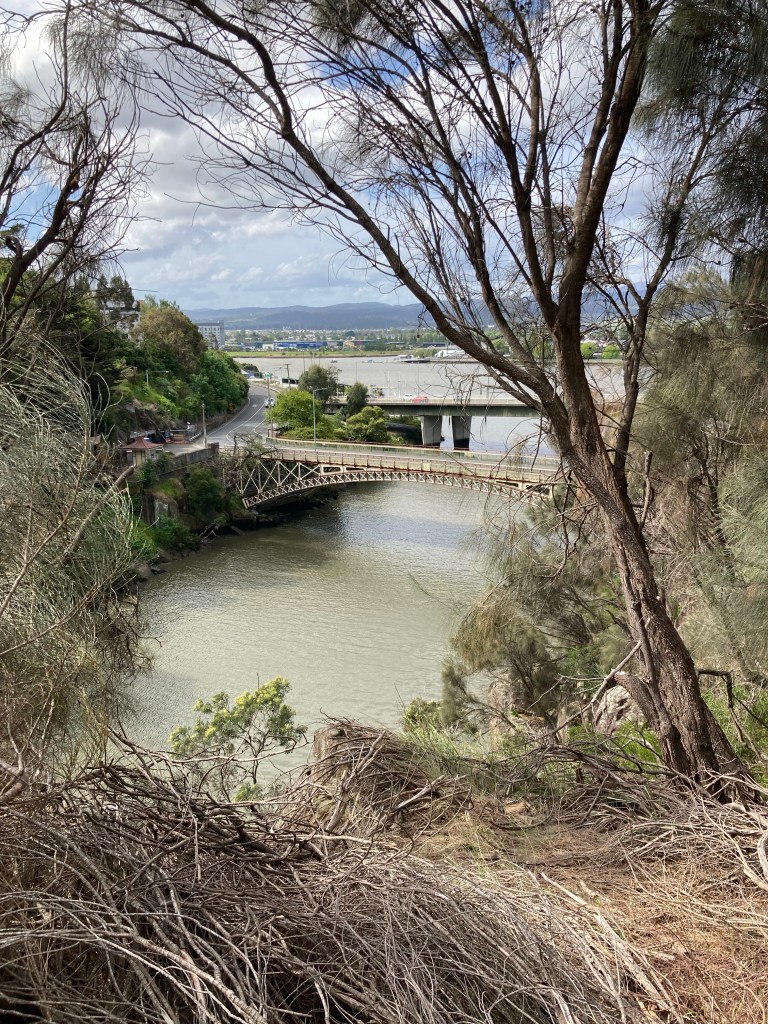
Landing in Tasmania looked a lot like landing in England. The weather was colder than Australia and the small but functional airport was a mix between Inverness inside and wales in the surrounding views. Having had a 1 hour delay due to plane mechanicals we were keen to get a cab to our hotel for the first night in downtown Launceston. Grabbing a cab, (Annabel researched the cheapest option), it took around 20 mins to get to hotel Grand Chancellor in the centre of the city. We quickly unpacked, dashed out to get a few more plasters and then went for the suggested walk in our welcome pack through the Royal Park in town and up the zig zag path which led to the cataract George, part of the hydro system . The views were spectacular and the climb steep and also marked “hard” at the bottom which Annabel didn’t notice and I didn’t point out. meet our tour guide at 6pm.
When I signed up for this walk I had been told I was in the last space, imagine our surprise when we firstly met one other couple and then secondly met the guide to be told that we were now the only 4 on the trip, however the upside was that it was going ahead and we would get undivided attention. After a great dinner albeit served slowly ( we were sharing the hotel with participants in the Tasmanian Brass Band competition who fortunately we couldn’t hear in our room) we headed off ready for a 6.30 start.
The Sunday dawned beautifully sunny. We were leaving Launceston at 7.45 and driving the 2 hour trip to St Helens where we would be based for the next 3 days. Our tour guide Kim had prepare a great elevenses break for us, tea \coffee and carrot cake which we had having unhooked the trailer at our accommodation and driven a few k’s further to Bjnalong Bay.
The lichen on the rocks making it appear red, the translucent sea and white sand were absolutely breathtaking. Even better we were the only people there.
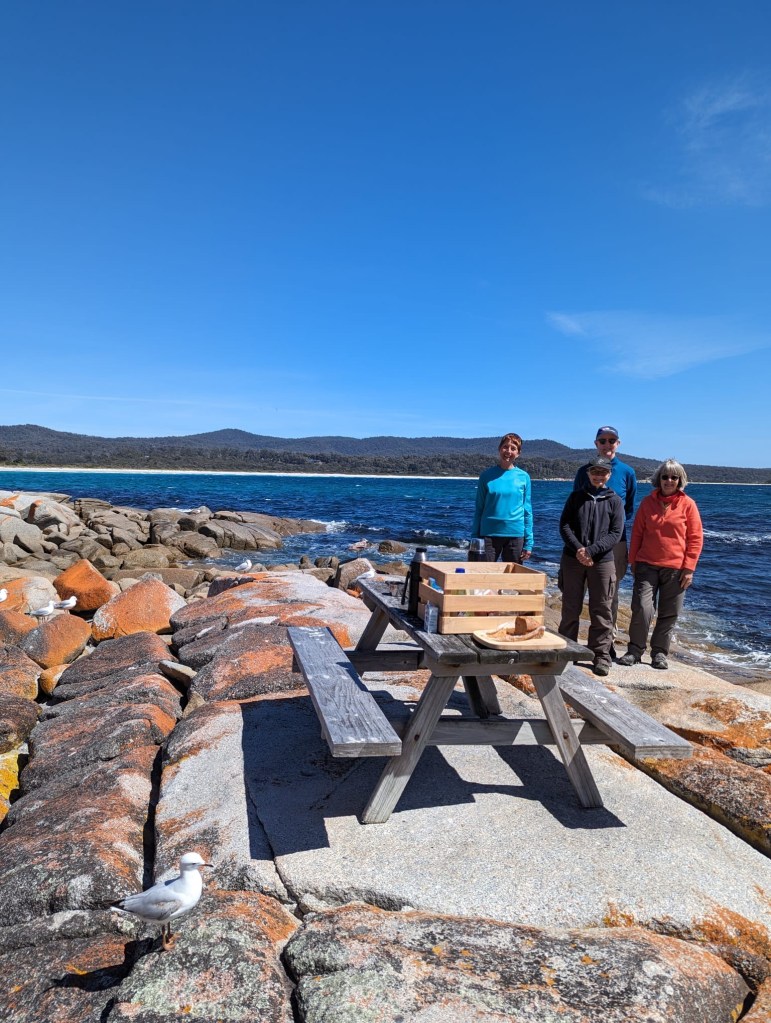
From our morning tea we drove a further 8k to our start point at Humbug National Park spotting some Turbo Chooks (Tasmanian Hens) en route, so called given their speed of up to 40 kmph. We arrived at the parking lot via a combination of winding and steep narrow roads, once we arrived there, there were a number of discreet bush parking bays, a number of which were occupied with vans \camper vans many of whom were owned by “silver nomads” as the locals like to call them. Those lucky enough to be able to live this lifestyle can stay for up to 28 days in beautiful parks \ conservation areas with almost deserted beaches all to themselves. Usefully there are a number of discrete toilet units dotted around with detail of local flora and fauna and wildlife usually adjacent to add to the experience.
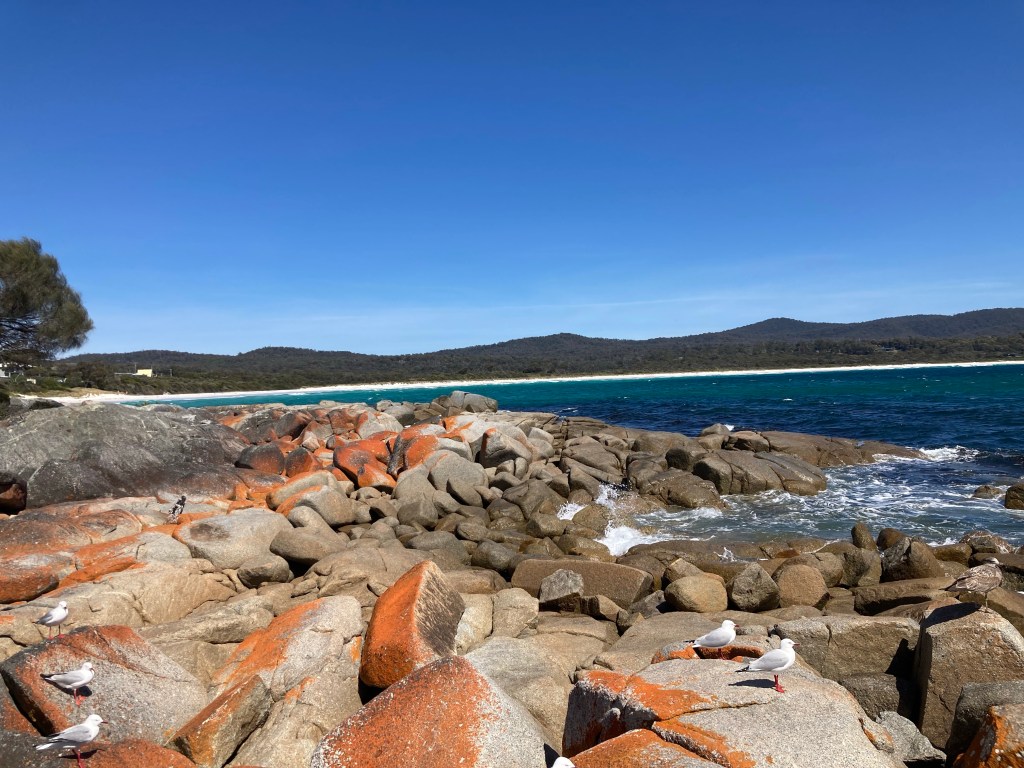
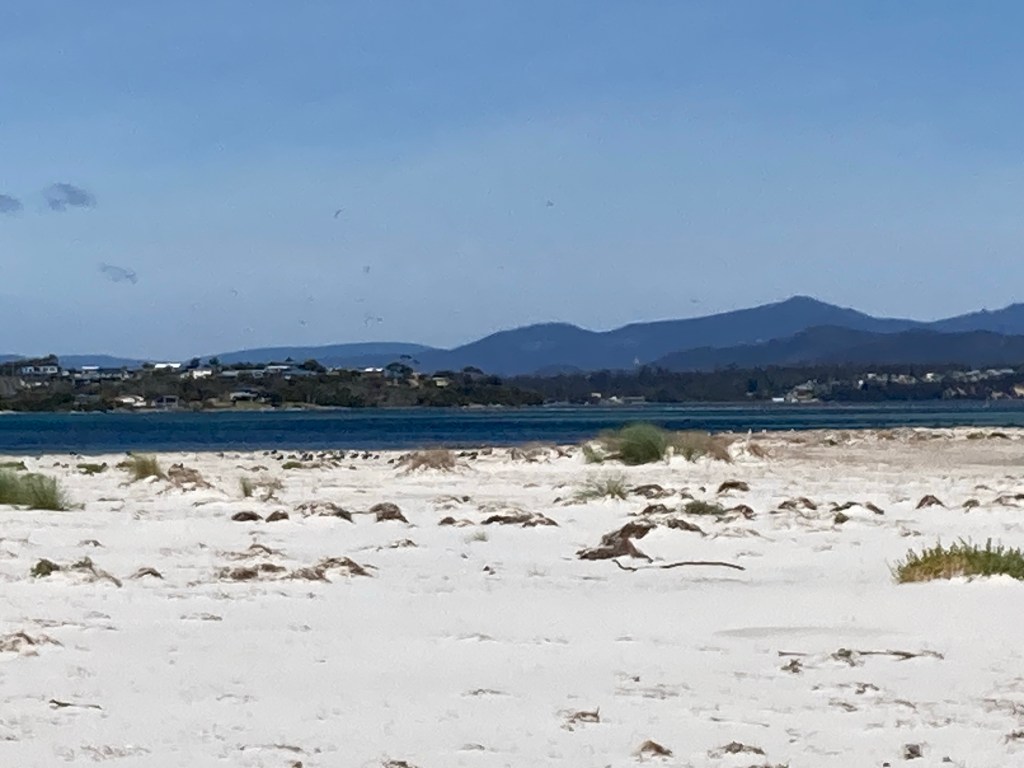
We headed out onto the beach, again white sand blue sea surrounded by rock and bush land.
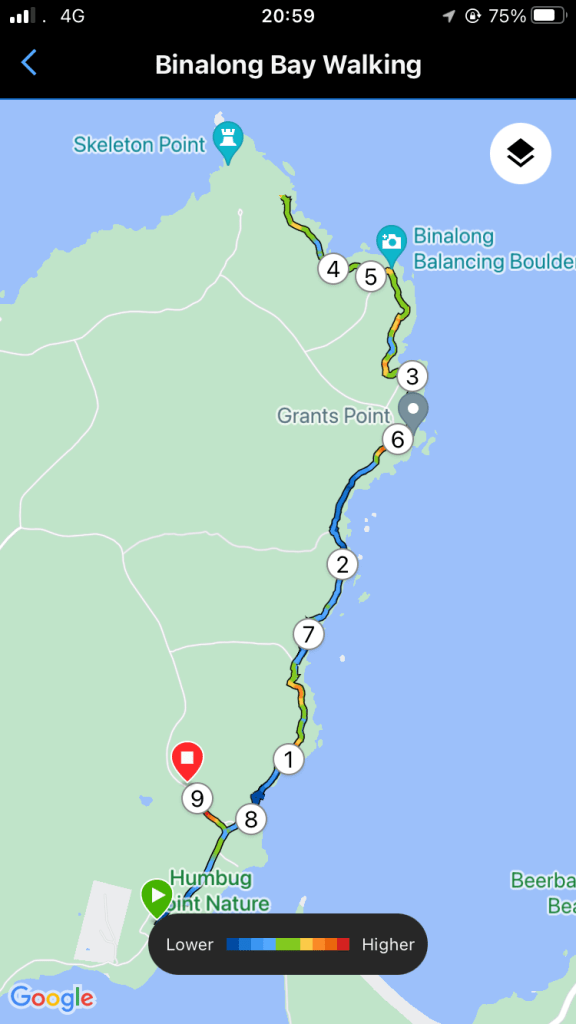
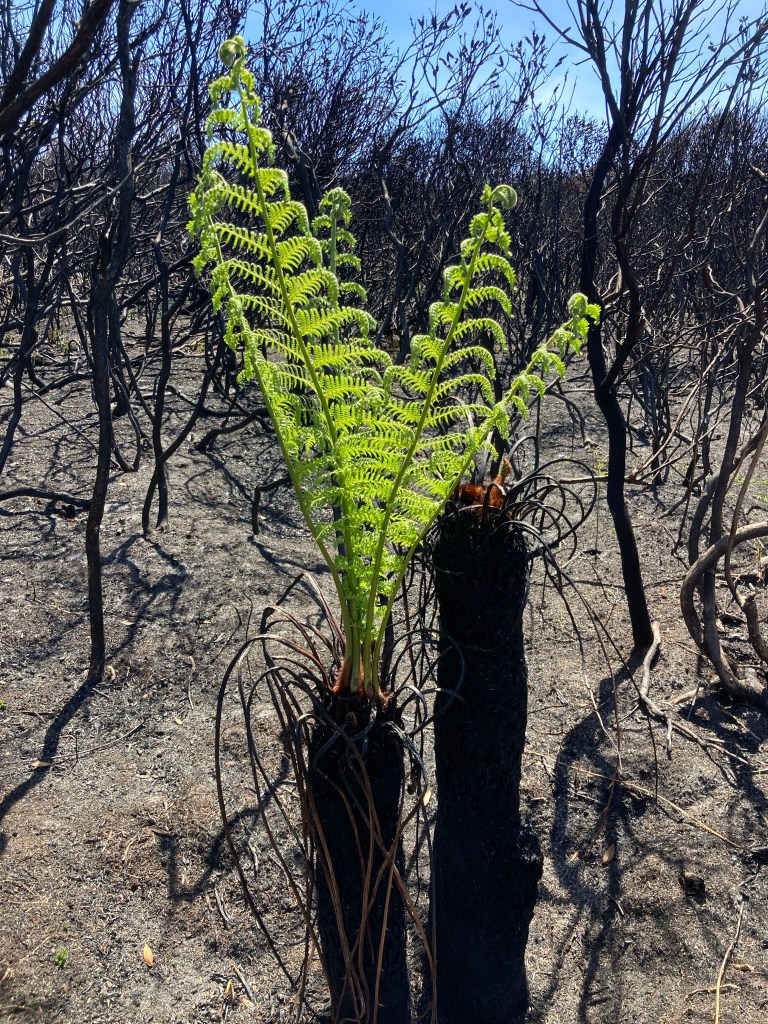
The walk itself was not too onerous and started at the end of the beach with a scramble over rocks and a small climb up into woodland. Initially the path had been signposted as closed but this had been one month ago and appeared to be due to controlled burning where fallen trees and debris had not yet all been cleared. We thought on assessment that the path looked fine and walked on through. The burning gives a mosaic impression once you enter it. There are patches where the area is dead and then patches where it is very much alive, the latter gives opportunity for local wild life to continue to exist and then move to the next zone as each is burned in turn.
Additionally from an eco point of view certain plants are stimulated by burning and it actively promotes new growth as below.
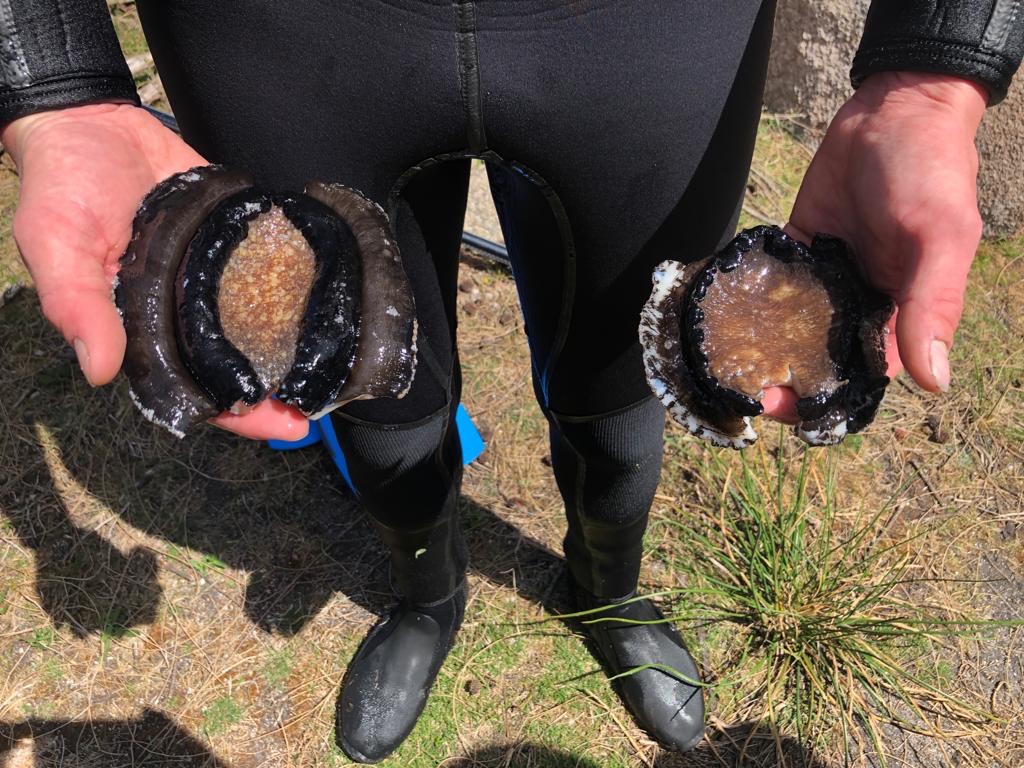
It was after walking some way along the path we came upon 2 lads in full wet suits who had been diving off the rocks and successfully caught Abalone, a Japanese delicacy that lives in shells whose texture is like oyster shells ie pearlised inside. They were cooking them up for tonight’s supper and looked pretty pleased with themselves.
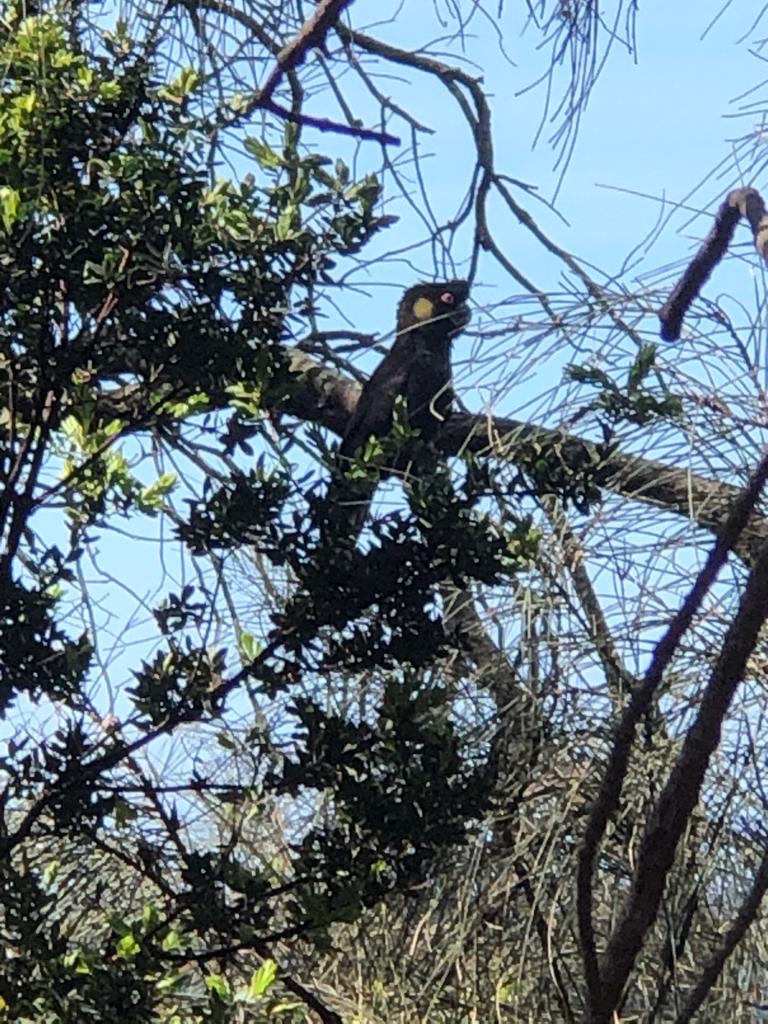
Walking on further and close to Skeleton Point we were aware of a lot of noise coming from the trees – on looking up we had a family of Black Cockatoos . One older young bird and parents with the young cockatoo calling noisily for food whilst the parents ignored him – hence the noise!
Having reached the end point of our walk just short of skeleton point we turned round and walked back the way we had come. The flora and fauna along the way were fascinating and Kim our guide for the week was extremely knowledgeable in local geography and geology making her able to explain and identify items on the way through .
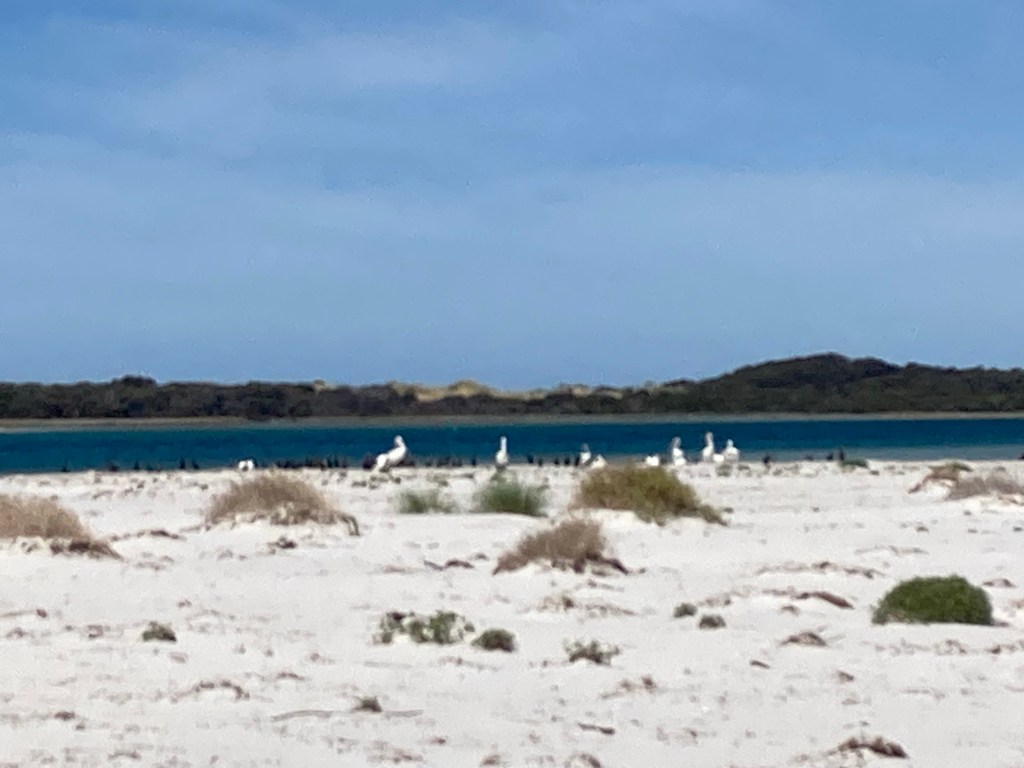
On reaching the beach we had started from the only thing to do was paddle – not quite as warm as we would have liked but extremely refreshing. From here and feeling somewhat weather beaten it was back in the bus and off to our accommodation . A great day and so much to take in. Roll on tomorrow.
 There and Back: